


 Česky (CZK)
 Slovensky (EUR)
Latex care
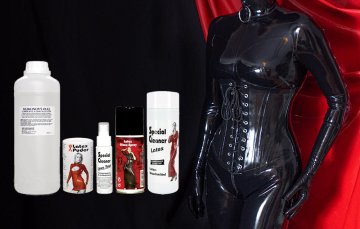
When you say latex, most of us imagine a seductive body covered in this original material, perfectly clinging without a single wrinkle and dazzling with its phenomenal shine. There are many ways to achieve such a look. In this article, we will teach you the main principles of caring for latex clothing and some tricks to make the job easier.
How to care for and maintain latex garments?
The foundation is to have a garment that fits perfectly, doesn't pinch, but also doesn't sag or bunch up. We will focus on choosing the right model in the next continuation of tips and guides, in the article Choosing latex clothing.
Now, let's move on to the promised care...
We will divide the care into 3 essential phases, which are:
- dressing and polishing,
- cleaning,
- storage.
Everything can be done in several ways, which we will explain to you in a moment. At the end of the article, you will find an instructional video. We apologize for the lower quality of the video footage. We believe that you will still gain the necessary inspiration from it.




Dressing and polishing latex
Dressing and polishing are closely related, so we included them in one point. For those who have no experience with latex, we will briefly explain.
Imagine, for example, classic rubber gloves for washing dishes and housework. The size of the glove is slightly smaller than your hand. Turn it inside out, with the smooth rubber inside, and try to dress it without creating any wrinkles. Surely you will agree that it takes some effort because the rubber sticks to the skin, pulls unpleasantly, and especially men with hair on their hands will suffer a bit during this attempt :-)
With latex, it's exactly the same, and because wearing it should primarily bring joy, it's necessary to simplify the dressing.
Solution No. 1 - latex powder
To prevent latex from sticking to the skin and to make it slide better, powder is used, which is dusted on the inner (reverse) side of the clothing. It has its advantages and disadvantages, and personally, we do not recommend this option too much. However, it is widespread and suits many people, so we will not overlook it.
What powder? The ideal is ordinary body powder without aromas and scents or any additives. Latex is a natural material, and added substances could disrupt its structure. So it's best to use original latex powder. It may be slightly more expensive than in an ordinary drugstore, but the price is still amusing.
The powder can be applied in several ways. For example, with gloves, the easiest way is to pour it inside and shake it. However, with a skirt, you certainly won't succeed :-) You must turn it inside out and dust it directly with powder or put it in a plastic bag, add powder, and shake it in the bag. The amount of powder is individual. Some people prefer a light dusting, while others prefer a thicker layer. Some apply powder directly to the body, others on latex, but these are details you have to figure out for yourself.
And now to squeeze into it. For example, let's choose long latex gloves. Some guides advise rolling the glove down, putting on the palm, and then rolling it up, similar to putting on a condom :-) But that doesn't work too well because when you roll such a long glove down, it creates a firm ring that you simply can't push your hand through. The correct advice is - don't roll, just bunch! The next step is similar. Put on the palm, push the air out of the fingers, fit everything correctly, and then gradually pull the bunched part of the glove up to the shoulder. The same method is used for stockings, sleeves, or tight pants. In the case of a skirt or dress, it's easier, but it still requires some patience. When dressing, be careful with jewelry or long nails. Carelessness can be quite costly. Everyone should be able to dress themselves, but if you have someone to help you, it's never a bad thing.
We are dressed, and now comes the dazzling shine. First, we get rid of the powder residues. Gloves can be rinsed under running water, and a damp cloth will serve for other clothing. The shine itself exists in several forms, and each manufacturer offers their original product. They are all very similar, and the most ideal for us is pure silicone oil for latex, which is applied to the garment. Just lightly sprinkle and spread with a soft cloth, sponge, or bare hand. Everyone prefers something different. Another popular option is the latex spray. However, it has one major disadvantage, which is that it disperses around. If you dress in latex at home in the living room or bedroom and spray, you will create a greasy film on everything (floor, furniture, TV, ...) that will be very difficult to remove. It's a bit mischievous, but we recommend using the spray only where you don't have to clean up after yourself. Outside, at a party, in a club, or maybe in the subway, like Honeyhair :-)




The choice of product is very important. They are all usually based on silicone oil, both liquid and sprays. The main difference is usually in the price. In some cases, polishing can cost 10 times more than the garment itself, which is quite impractical. Cheap products may not polish as well or may even damage the garment. Precisely because of the price, some "tinkerers" have discovered very cheap substitutes that can be bought in drugstores or gas stations. We will deliberately not even name them. We strongly warn against using such products! They often contain traces of gasoline and various solvents, which are definitely not beneficial to latex and especially not to human skin!
Solution No. 2 - dressing without auxiliary products
This method is hardly used. The idea is that some people like latex completely clean, without powder and shine. Dressing is much more complicated and requires much more patience and caution. Untreated material is also much more prone to damage and ages faster. So we do not recommend it too much.
Solution No. 3 - silicone oil on latex garment inside and outside - WE RECOMMEND!
The easiest, fastest, and most effective way to dress latex is with the use of silicone oil.
Just as we polished the garment on the outside in the first solution, we simply polish it on both sides (inside and outside). By having the inner side greased with oil, we will slip into the garment like butter. Of course, it is necessary to follow all the principles we described above. Be careful with nails and sharp objects, bunch gloves before dressing, etc. Instead of powder, we use oil for dressing.
Advantages of this "wet" method:
- We use only one product instead of two. We use oil on both the inside and outside, and in that case, we don't need powder at all.
- Simplification of work during cleaning, storage, and dressing. If you use powder for dressing, you must also store latex powdered, which requires perfectly degreasing it from shine after each wear, drying it perfectly, powdering it, and storing it. Next time when dressing, you have to wash the outside from powder and polish it again. And so on, which in this case is eliminated.
- With the wet method, you store the garment polished, so always a bit greasy, which suits it much better. When dressing, you just take it out of the closet, slip into it immediately, and you're already polished! When undressing, just rinse off the sweat, let it drip, lightly polish, and return it to the closet.
- For latex, this is the most beneficial treatment. You will significantly extend its lifespan.
- For you, it's the easiest. You don't have to keep powdering, polishing, powdering, polishing, …
More in the video at the end of the article.
Cleaning latex by hand
Just like any regular clothing is occasionally washed, latex clothing also needs to be cleaned, and not just occasionally, but after every wear. A person naturally sweats in it, and the sweat has nowhere to evaporate. Whether you use powder or oil for dressing (see above), once you take off the latex, it will be moist from sweat inside. Therefore, simply rinse it under running water or soak it in a basin or bathtub.
Anyone who uses powder must thoroughly wash the latex after taking it off, not only from sweat and powder residues but also completely remove the shine!
The shine and silicone oil can be perfectly removed with dish soap like Jare. However, a professional latex cleaner - beGLOSS Latex Detergent - Special Wash is better.
Be careful, once the latex is thoroughly cleaned, degreased, and starts to dry, it will begin to stick to itself. At that moment, you must handle it with maximum caution, and once it dries completely, powder it thoroughly and store it.
So you see, the dry method with powder is no joke.
Anyone who uses silicone oil has won. The undressed garment is simply rinsed from sweat and minor dirt, but not degreased to dryness!
How to do it? We have the latex undressed and rinsed. Then we fill a basin or bathtub with clean, lukewarm water and add a few drops of silicone oil. We soak it in this bath, so it gets greased again. The amount of oil is individual, depending on the amount of clothing and also according to what suits whom. But just a few drops are enough.
Then hang it on some dryer or hanger and let it dry from both sides (inside and outside). Once it dries, the water will evaporate, and only the shine will remain. The polished, slightly greasy garment is now stored in its place. We have it in a state that is ideal for storage, and moreover, whenever we feel like it, we can take it out and slip into it immediately without complicated procedures.
Quick, simple, and using only one product - Silicone oil for latex, which is also the cheapest on the market.
You can find a demonstration in the video at the end of the article.
Washing latex in a washing machine

Yes, it is really possible, and moreover, it is a much higher quality cleaning for latex than hand washing. In the washing machine, sweat, grease, and skin residues are perfectly removed. The special detergent also disinfects the latex, which cannot be achieved by hand soaking in a basin.
Washing latex in a washing machine is quick, convenient, and completely safe for both the material and the washing machine itself when following a few basic rules. Always wash latex clothing separately, ideally in a protective laundry bag, on a gentle cycle. We recommend either a classic cotton program or a quick program. The temperature should be between 30 - 40 °C, and the most important:
- No spinning!
- Use a special detergent designed for latex! We recommend beGLOSS Latex Detergent - Special Wash.
Never use regular laundry detergents or fabric softeners, which can damage latex. After washing, immediately remove the latex and let it air dry.
Washing latex in a washing machine does not damage the machine or affect subsequent washing of regular clothes. Special detergents for latex are fully soluble and leave no residues.
Useful tips for washing latex in a washing machine
The first thing that comes to mind is that latex is washed only from one side. This is not true because when it spins in the washing machine for 2 hours, water with detergent gets everywhere, and the same applies to rinsing. If you still have doubts, it is good to shower while dressed, undress in the shower, and put everything in the washing machine inside out. The outer side will be pre-cleaned from the shower, and the inner side will have a more thorough cleaning in the washing machine.
Smaller pieces of clothing, especially gloves, are recommended to be washed in a laundry bag. Without a bag, fingers may go through the holes in the drum and get damaged. It is generally recommended to put everything in a bag, including catsuits, etc. In a bag, the clothing is more protected, without a bag it rinses better.
Before washing, always make sure that you have the temperature set to 30 - 40 °C and a program without spinning!
The detergent (detergent) belongs in the compartment for liquid detergent. The amount should be approximately 10 - 20 ml. There should be a little foam visible in the drum. It always depends on the amount of latex, the degree of dirt, and mainly how much shine and silicone oil was on the latex. If the drum is full of foam, you used too much detergent. If the latex is still very greasy after washing, you used too little detergent. Whether you use too little or too much, don't worry, you won't spoil anything. After the first 2 - 3 tries, you'll learn to estimate it, and washing latex will become fun for you. Or rather, it will stop being a nuisance.
After washing, hang the latex and let it dry thoroughly from both sides (inside and outside). With the correct detergent dosage, the latex should not stick to itself. You can still encounter slight stickiness. To prevent this, you can add a little silicone oil to the fabric softener compartment. This will create a thin silicone film on the latex, which prevents sticking and is good for storing latex.
Note - silicone oil can leave a greasy trace in the washing machine, which is not desirable for subsequent washing of regular clothes. Therefore, add only a little. Regular washing will easily remove the grease. Using silicone oil instead of fabric softener is not essential, and you can easily omit it. You will have 100% certainty that you won't clog your washing machine.
Storing latex
We have partially mentioned storage in the previous points, so we already know that we can store latex either powdered or polished with silicone oil. Neither option is suitable for storage together with other (regular) clothing. Oil or powder does not belong on regular clothing :-) In both cases, a sturdy plastic bag or bag that doesn't release color is good. Or...
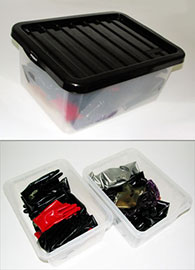
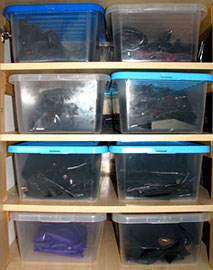
The best thing you can store latex in is plastic storage boxes!
It's better to have more smaller ones than one big one, so the pieces at the bottom don't get too wrinkled under the weight of others. And also for your overview and order.
If you do not endanger other clothing with oil or powder, latex can also hang freely on a hanger. It is important that the hanger is not unnecessarily narrow or sharp, so as not to damage the shoulders of the garment.
As you can see, latex clothing requires some care, but if you try it a few times, you'll find that it's not that complicated. Everyone does it a little differently, and surely there would be other tricks. We have introduced you to the most commonly used methods, and which one you choose or how you adapt it is up to you.
Video tutorial - latex care
Don't miss other articles and always have them first-hand.
Subscribe to our newsletter and don't miss a thing >>>
Author: Martin Hrubý - MH Sexshop

Founder and operator of MH Sexshop and author of all texts on these pages. Since 2004, I handle all orders and advise you when shopping. More info can be found in the About Us section.